01 / Research
Experiments on language-model representations and behavior, with controls, limitations, and reproducible results.
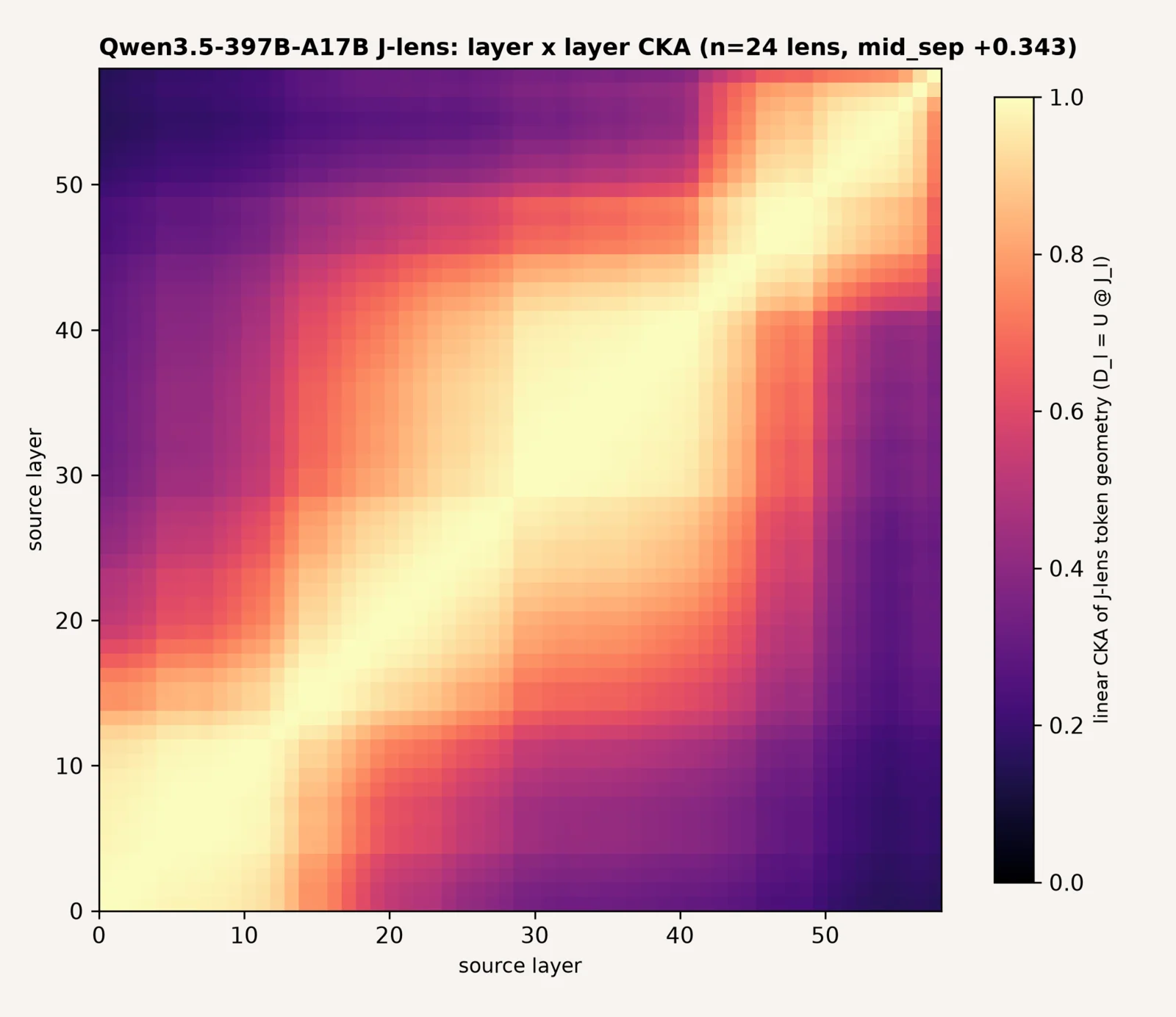
Which layers have similar readouts?
Layer similarity reveals structure in the fitted lens; it does not establish a shared causal mechanism.
Read the lens audit →
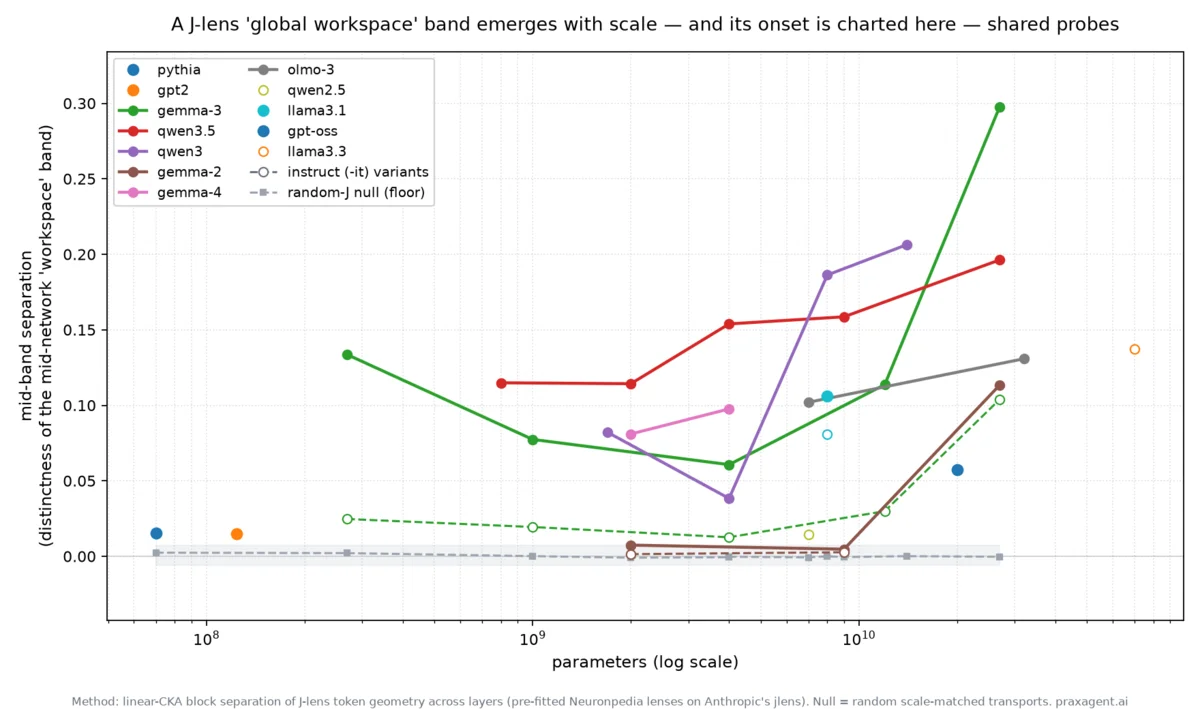
How does the layer pattern vary with scale?
The comparison spans model families, so size alone cannot explain the differences.
Explore the model comparison →
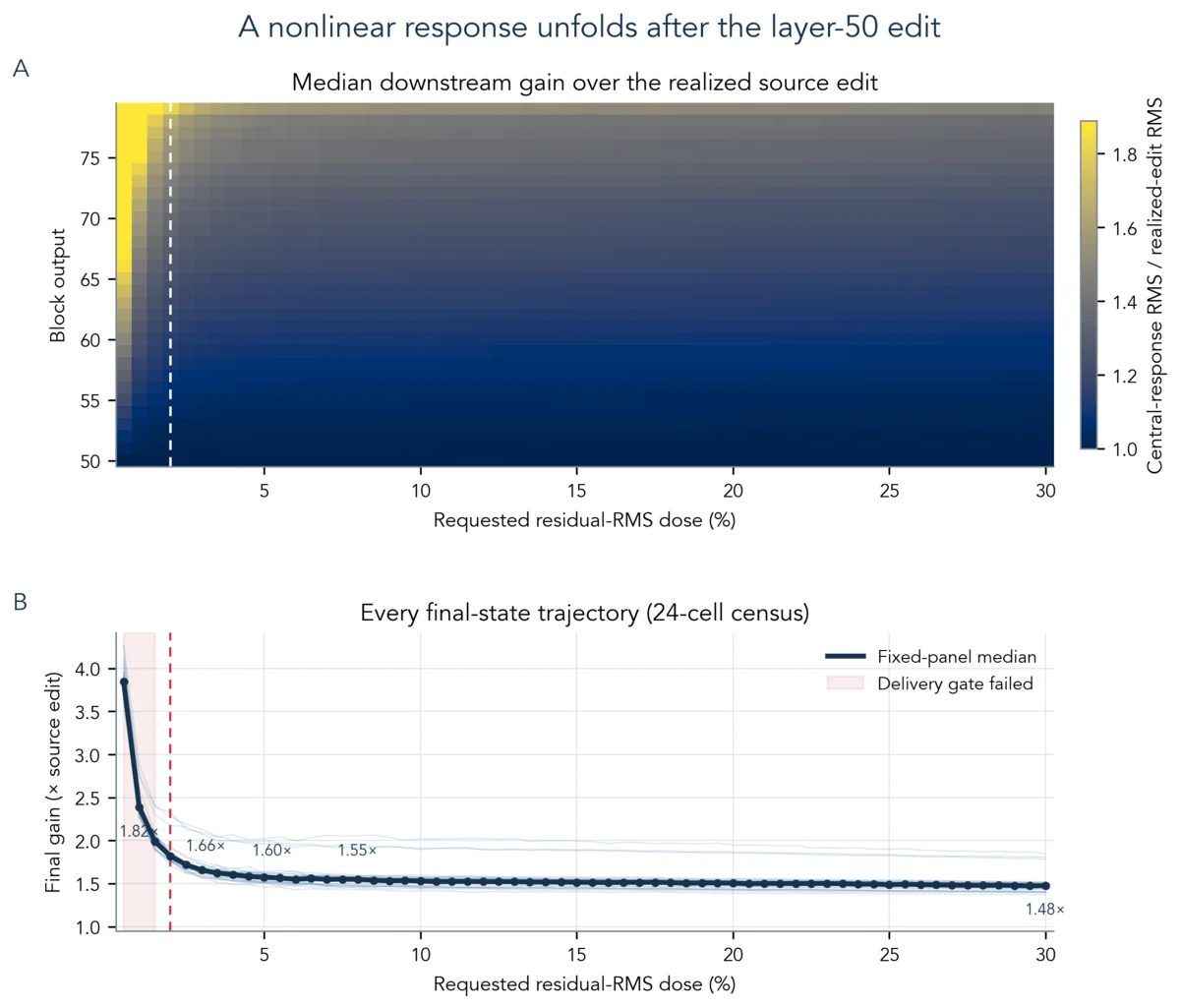
Do larger edits produce proportional responses?
Delivered edits scale with dose, but the model’s downstream response departs from that scaling.
Read the intervention test →
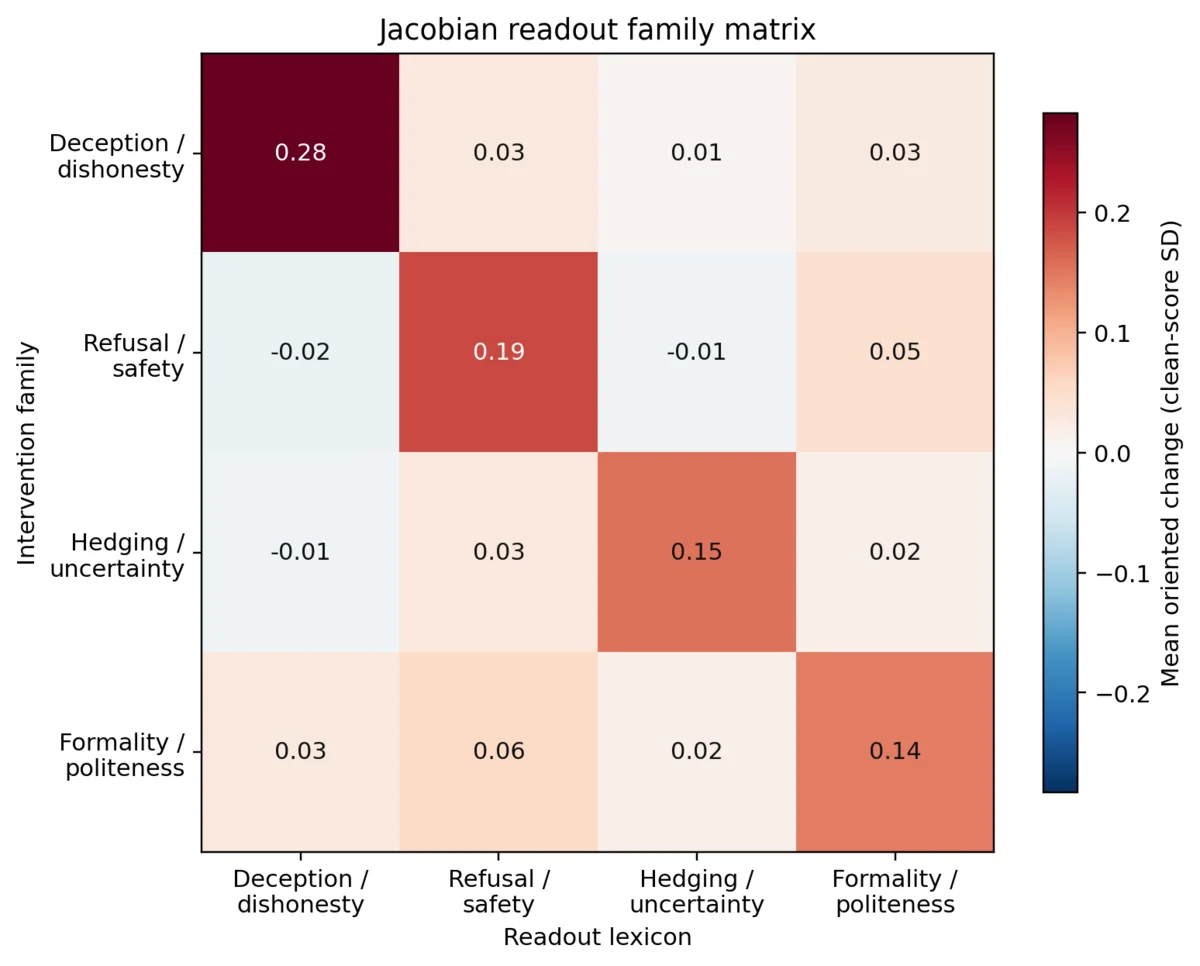
Can an internal readout detect steering?
A matched clean run reveals a steering signal, but related features can produce similar signals.
Read the steering experiment →Recent examples

A self-hosted system for coordinating AI agents, with a shared workspace, sandboxed tools, plugins, and optional isolation of provider credentials.
GitHub ↗
Coordinate agents with persistent memory, tool permissions, and integrations for chat, code, and browsing.
A shared workspace for chat, task boards, files, terminal access, and browser interaction.
A container-based environment for coding agents, browser automation, and desktop tools.
Keeps provider API keys outside the agent process when deployed as an isolated service.
Jacobian lenses, sparse autoencoders, activation analysis, and controlled tests of what internal readouts establish.
Matched comparisons, behavioral probes, null baselines, leakage checks, and reproducible evaluation infrastructure.
Agent environments, retrieval systems, and evidence pipelines that connect model behavior to inspectable source material.
praxagent publishes independent AI research and open-source software. Research notes are authored by Timothy Jones, with collaborators credited on each project. Read the research notes or get in touch about research collaboration or Prax.
Published code, prompts, data, and result records let readers check the evidence behind each claim.
Matched baselines and null tests determine what survives into the conclusion.
Negative results and broken hypotheses remain part of the public record.